Synthetic HDAC Inhibitors

Logical Design
At Synthistat Ltd, we logically design our HDAC inhibitors based on structure based understanding of how specific components
(cap, linker and ZBG) in combination, yield the best pharmaceutical characteristics during in-silico testing.

Better Than The Best
Following the discovery that panobinostat outperforms sodium butyrate for lentiviral vector production, Synthistat decoded the specific structural features within panobinostat that yield this performance improvement and incorporate this understanding into our own proprietary HDACi designs.
We also identify and focus on developing candidates with better molecular docking and predicted solubility versus panobinostat.

The LVV Purpose
Our synthetic HDAC inhibitors are being developed for usage in lentiviral vector manufacturing and they are intended to supersede the usage of both sodium butyrate and panobinostat.

The Clinical Purpose
Our candidates also exhibit classical drug-like characteristics, with improved molecular docking performance and predicted solubility relative to panobinostat. Accordingly, they show strong potential as pre-clinical candidates for the same therapeutic indications as panobinostat and other HDAC inhibitors, including oncological malignancies.

Multi-Targeting for Improved Efficacy
Advanced embodiments of our patent-pending HDAC inhibitors demonstrate multi-target activity, further inhibiting D2R, PARP1 and/or BRD4. This integrated mechanism enables disruption of epigenetic regulation, survival pathways, and transcriptional control in AML and solid cancers, resulting in broader therapeutic potential.

Ligand Pose Verification
Our candidates’ target activity is validated through multi-campaign ligand pose verification using diverse receptor structures and proven binding geometry rules, allowing confident exclusion of false-positive hits. Concurrent off-target screening, including hERG liability assessment, further strengthens candidate quality and developability.
Modified Producer Lines

Knock Out Cell Lines
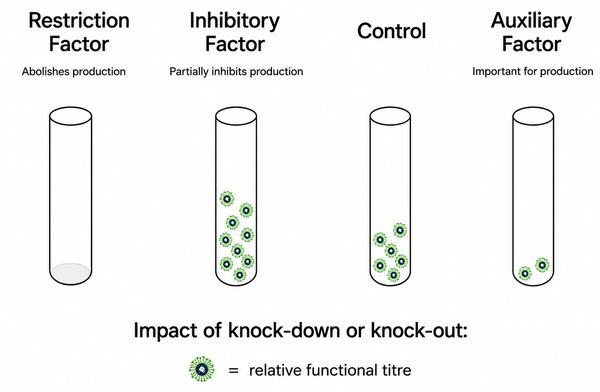
There is the presence of specific endogenously expressed HIV-1 restriction factors, within HEK293 derived producer lines, that impede lentiviral vector biogenesis at various steps and can be suppressed to support LVV production.
While a few have also been published upon by other groups, we have identified a list of 29 restriction factors, that have not been studied by other groups.
Scientifically Validated Approach
We have successfully validated our logical candidate selection approach by randomly selecting three KO targets and assessing the impact of their suppression during lentiviral vector production using a siRNA co-transfection protocol, where we transfect our packaging plasmids and siRNA together and then later assess the impact of target gene suppression upon LVV production.

Immediately Available Results
All three selection candidates were demonstrated to improve titres 2-3 fold versus control and the siRNA approach is also a viable approach which can be made GMP compliant and is readily available for research and commercial usage.
However, the knock out approach can be more economical and convenient.